Soon after President Donald Trump’s inauguration, leaders at the Johns Hopkins University gathered their diversity office staff to deliver stark news.
Because of a White House edict condemning diversity, equity and inclusion policies, university lawyers would need to approve all the office’s work. Hopkins’ top brass — the general counsel, chief of human resources and executive vice provost — promised the legal reviews would be quick, according to two former employees.
“The reviews never happened,” said Vicki Keller, the former senior program manager for faculty diversity. “I wanted to work, but I couldn’t.”
It was the first sign of a shift for Hopkins, an elite university that had previously championed efforts to diversify its faculty and student body. Since January, Hopkins has changed policies, ended diverse hiring programs and downsized its diversity office from 14 employees to three.
The changes come as the university navigates a volatile federal landscape. Hopkins has faced estimated losses of more than $1 billion in research and international aid funding. It has frozen hiring and pay increases as it weathers the cuts, while nearly doubling its spending in federal lobbying.
Meanwhile, the university is under investigation by the Trump administration for alleged antisemitism.
Read More
Keller ultimately quit. She loved her job but said she couldn’t do simple administrative tasks such as updating the website for a postdoctoral fellowship program and scheduling events for a diverse faculty initiative. She spent her days sitting at her desk, waiting for approvals that she said never came.
The university has been “engaged and open” about these issues, according to Doug Donovan, a Hopkins spokesperson.
“We always start with our unwavering commitment to meeting the needs of all of our students, faculty, and staff,” Donovan wrote in a statement to The Baltimore Banner. “We fiercely oppose discrimination of any kind, and we value equal opportunity as part of building a pluralistic community of diverse backgrounds, experiences, and viewpoints.”
Diversity rollbacks
The changes at Hopkins mirror those at colleges across the country, which are shuttering or reorganizing their diversity offices. Maryland’s flagship university renamed its diversity office, as did the University of Michigan.
Most institutions that embraced diversity practices in recent years have “stopped short of transformational change,” said Roger L. Worthington, associate professor at the University of Maryland, College Park, and executive director at the Center for Diversity and Inclusion in Higher Education.
“A lot of the work has been performative,” Worthington said. “It’s been to enhance the image of universities and other institutions that saw there was a groundswell of public opinion that supported equity and justice issues.”
But now, Worthington said, the pendulum has swung in the opposite direction.
“It’s not surprising that, when the Trump administration comes out and attacks this, the framework for the work at institutions essentially crumbles,” Worthington said. “It’s easily disassembled because it was never really fully integrated.”
Once Trump came into office in January, the “rollbacks of diversity became loud,” said Angel St. Jean, the co-founder and CEO of The Black Brain Trust, an organization that measures DEI in companies and government agencies.
“Trump is the excuse for doing what was never a real commitment in the first place,” St. Jean said.

After the meeting with Hopkins leadership, the diversity office’s programming came to a halt, said Keller and another former employee, who asked not to be named because they feared it would hurt their chances of finding a new job. Then, they said, their co-workers slowly started to be offered other jobs within the university — often jobs they hadn’t applied for. All three employees on the university’s inclusive excellence education and development team, which was established last year to strengthen the campus climate through workshops, were laid off, they said.
The central diversity office has shrunk by nearly 80%, according to Keller, a former employee of the office and the LinkedIn pages of other former employees. Johns Hopkins declined to confirm the number, calling it a personnel issue.
Katrina Caldwell, the chief diversity officer, went on leave in February, according to Keller and a former office employee. Keller said she assumed Emil Cunningham, Caldwell’s deputy, would take over, but Lainie Rutkow, the university’s executive vice provost, stepped in to lead the department.
“It signaled to me that we were being watched,” Keller said.
Then, in June, the remaining employees were gathered again for more news: Caldwell and Cunningham were no longer with the university. Caldwell declined to comment for this story, and attempts to reach Cunningham were unsuccessful.
Changing policies
As a new academic year began this fall, Johns Hopkins released a new policy titled “Prohibition on the Consideration of Race or Ethnicity in University Programs and Activities.” The Banner reviewed the policy, which is available only to people with a Hopkins email address.
The guidance document was created by the university’s Office of General Counsel to help faculty and staff comply with nondiscrimination law, according to its cover letter.
It labels as “impermissible” scholarships exclusively for underrepresented students, mentoring initiatives available only to members of a certain race or ethnicity, programs that provide opportunities to students from underrepresented backgrounds and “resources for underrepresented students.”
The guidance also states that Hopkins cannot sponsor or recognize affinity groups if they limit membership based on race or ethnicity. In addition, the university will not host or sponsor events or conferences that limit attendance based on race or ethnicity, nor will it offer awards or benefits to students or employees during heritage months based on their identity.
“The university recognizes the evolving legal and policy landscape and heightened scrutiny of diversity-related efforts,” the policy reads.
It states that members of the Hopkins community “should avoid requesting racial or ethnic data ... whenever possible.”
Hopkins officials did not answer a question about whether any events have been changed or canceled to comply with the policy. But at least two faculty and postdoctoral recruitment programs centered on diversity have ended, according to Keller, who oversaw the initiatives.
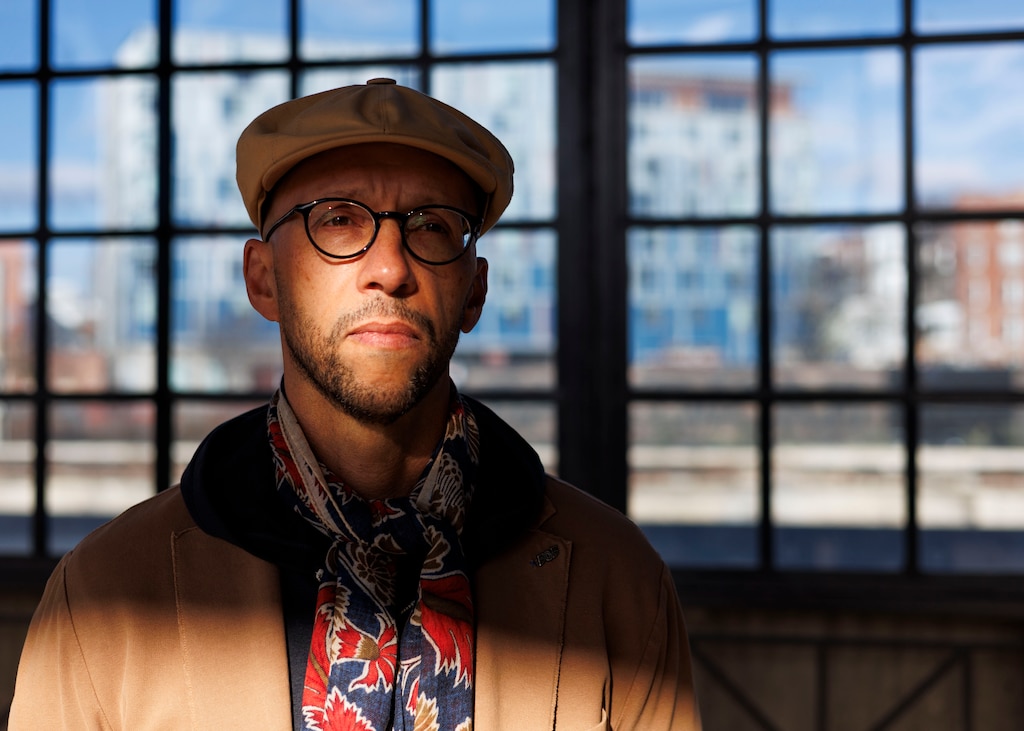
Minkah Makalani, an associate professor and director of the Center for Africana Studies at the university, was recruiting scholars to join the university’s Fannie Gaston-Johansson Faculty of Excellence program when he got the news it had ended.
The program was established in 2015 as part of Johns Hopkins’ Faculty Diversity Initiative and renamed in 2022 after Gaston-Johansson, the university’s first Black woman to earn tenure. It recruited over 40 tenure-track faculty and helped to increase minority representation on the faculty from 8% in 2015 to 12% in 2023.
Makalani hired two faculty members through the program. He got permission to make a third hire, but before the offer was formally drawn up, he was told it was “on pause.”
The university will no longer recruit or retain faculty via the program.
The pause was shared the same day that Hopkins announced its partnership with the American Enterprise Institute to recruit more conservative voices into academia, Makalani remembers. It was also the anniversary of the assassination of Martin Luther King Jr.
“We were told this was because of financial issues, given the changing landscape of funding for the university,” Makalani said. “As a historian of the Black experience, there was an extremely disconcerting nature of the announcement.”
Makalani said the “shifting priorities” of Hopkins had left him “disillusioned” with leadership.
“This is an institution that has shared its commitments to diversity in multiple documents and multiple statements,” he said. “It’s demonstrative of a lack of commitment to those stated principles.”
This article has been updated to clarify that only scholarships exclusively for underrepresented students are deemed impermissible at Hopkins, and that this guidance is intended to comply with federal nondiscrimination law.
About the Education Hub
This reporting is part of The Banner’s Education Hub, community-funded journalism that provides parents with resources they need to make decisions about how their children learn. Read more.


Comments
Welcome to The Banner's subscriber-only commenting community. Please review our community guidelines.