
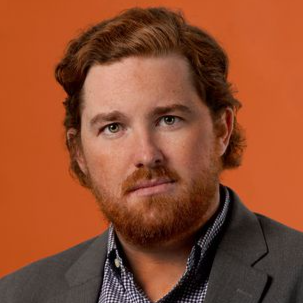
When Greg Cross came before Gov. Wes Moore and the Board of Public Works last May, it was a big day for Maryland horse racing.
As chairman of the Maryland Thoroughbred Racetrack Operating Authority board, Cross sought approval for the state to purchase Shamrock Farm, a bucolic, 328-acre site in Carroll County, for $4.5 million.
Owned by the family that owns the Pittsburgh Steelers, Shamrock was to be the site of a state-of-the-art horse training center, a key part of a $530 million investment to revitalize Maryland horse racing. Located just over 20 miles northwest of Pimlico Race Course in Baltimore, Shamrock would house 800 horses and employ 500 people.
“It’s the perfect site,” Cross said.
The legislature had mandated $110 million to be spent on the center, among the largest state investments in Carroll County’s history. Cross had been the one to make it happen.
As it turns out, Shamrock, which was purchased from a member of the racetrack operating authority board, was not the perfect site.
Read More
Engineers had not fully evaluated Shamrock before the vote approving its purchase, and have since determined the terrain is too hilly to be developed on budget. Environmental regulators found major issues. Carroll County’s local government, once supportive of the development, chilled to it.
Now estimated to cost north of $210 million, the Shamrock Farm project is dead, state officials say.
Instead, the state is prepared to spend about $50 million to purchase the dilapidated Laurel Park, a racetrack in Anne Arundel County, and turn it into the training center. Approximately $70 million more will get spent to renovate and upgrade it.
In a June 16 exit memo addressed to Moore and his top lieutenants, Cross wrote he had explored purchasing Laurel in the fall of 2024. If the state could get it for around $50 million, it could do some renovations and could see “substantial savings” compared to the Shamrock project.
The memo, which has not been previously reported, calls into question whether Maryland should have bought Shamrock Farm in the first place. By the time Moore and another Board of Public Works member, State Treasurer Dereck Davis, voted to approve Shamrock’s purchase, it was already known that the Maryland Thoroughbred Racetrack Authority, or MTROA, had problems.
In the final days of the 2025 legislative session, top lawmakers made the abrupt decision to close the authority four years before its sunset date under state law. They said little, but what they did say hinted that the MTROA was not well run.
It’s a sentiment reflected in interviews with a handful of state officials and six former authority board members, who painted a picture of a dysfunctional authority with Cross at the center. Moore’s office said in an email that the MTROA was shut down and its responsibilities transferred to other entities to “ensure stronger controls, transparency, and accountability.”
Cross, in an email to The Banner, said the MTROA was always destined to sunset, and the premise that it was closed early was “false.” When lawmakers shut it down, it had accomplished its tasks, he said.
Perhaps nothing illustrates the disorder of the MTROA like the saga of Shamrock Farm, involving a former Florida Congressman, a “prominent veterinarian,” self-dealing and a particularly pesky population of brown trout.
Greg Cross, ‘the leader we need’
When the legislature established the MTROA in 2023, it charged it with finding a future for thoroughbred racing in Maryland that did not include the Stronach family, which had a monopoly on the sport.
Moore’s decision to name Cross the MTROA’s inaugural chairman in 2023 was widely seen as a smart choice. Cross had represented Maryland’s interests in horse racing on and off for more than a decade, and had close relationships with key figures in the industry.
“Greg Cross is the leader we need in this critical position,” Moore said then.

A partner at the high-powered Venable law firm, Cross is known as one of the best bankruptcy attorneys in the country. He first met Moore when the then-future governor gave a speech at Venable’s office some years ago, which left Cross “extremely impressed,” he said.
In turn, Cross became something of a super-donor to Moore’s campaign. He and his wife have given tens of thousands, and they’ve hosted a fundraiser for Moore at their home on Gibson Island, an elegant, exclusive community on the Chesapeake Bay.
Ammar Moussa, a spokesperson for Moore, said campaign fundraising has no bearing on state appointments.
The Moore administration in 2024 backed a plan put forth by the MTROA to rebuild Pimlico and have the state take over day-to-day operations of horse racing, which would be consolidated at a revamped version of the Park Heights track. The timeline called for holding the Preakness Stakes at Laurel in 2026 while the new track was being built out, with the second leg of the Triple Crown to return to Park Heights in 2027.
As part of the plan, the state’s lease on Laurel Park would expire at the end of 2027 (after which, it was assumed, the Stronach family would either develop or sell the land where Laurel Park sits) — which meant a new training center needed to be open by 2028.
Given the size of the tasks and the speed at which they needed to be accomplished, Cross went into the job at breakneck speed.
State officials and former board members, most of whom requested anonymity to speak freely about the topic, described Cross as highly motivated and talented — though some questioned his methods.
Despite being a public body, the MTROA board handled much of its business in closed session, the people said. Oftentimes the members discussed information in private that similar entities, like the Maryland Stadium Authority, would have done publicly. Votes would sometimes be conducted by email and MTROA staff would ask board members to share their votes privately. Meeting minutes were sometimes sparse regarding what had been discussed, according to interviews and a review of the documents.
“There has never been even an allegation that we did not act in full compliance with the open meetings act,” Cross wrote in the email.

The law creating the MTROA exempted it from state procurement policy, and as such it never developed one of its own. That meant Cross or the executive staff hired consultants without soliciting proposals or giving the board an opportunity to weigh in, though the 10-member board regularly voted afterward to approve them anyway.
A state audit released in October found “significant instances of noncompliance with applicable laws, rules, or regulations.” Contracts were executed without defining deliverable goals or deadlines. One consultant, for example was paid $413,000 for providing “continuous and intense focus on the project until its completion in 2027,” an apparent reference to the Pimlico renovations and Shamrock project.
In total, the MTROA spent $3.4 million on consultants, law firms and other vendors in the two years it operated, state spending records show. The state is still digging its way through the MTROA finances. The proposed budget for the upcoming fiscal year includes $2 million to cover operational shortfalls from last year’s budget.
Buying Shamrock
At least one former MTROA member thinks Cross excelled in his role as chairman.
Tom Rooney, president and CEO of the National Thoroughbred Racing Association, praised the strategy Cross employed in making a deal with the Stronach Group for the Preakness Stakes. That agreement will pay Stronach an estimated $5 million annually as part of a licensing deal starting in 2027, when the state becomes the operator of Preakness.
“I think it was run well,” Rooney said of the MTROA.
A former Republican member of the House of Representatives for Florida, Rooney is a member of the famous Rooney family that owns the Steelers, and that owned Shamrock Farm.
When the MTROA began evaluating potential sites for the future training facility in 2023, it was through “industry sources” that the authority learned that Shamrock Farm “may be for sale,” according to a footnote in a report submitted to the legislature. The note continued that a member of the authority leading the search reached out to Rooney, who “confirmed that a sale may be possible.”
Rooney said those industry sources were horse trainers and a “prominent veterinarian” who acted as middlemen to the authority.
“It wasn’t brought forward by me, it was brought forward to other people on the authority,” he said in an interview.

At the beginning of 2024, the MTROA released a consultant’s report advising on eight possible training sites. Evaluated across nine categories, Shamrock received 37 points out of a possible 45. It was tied with Mitchell Farm, a plot of land in Harford County, which scored better on two categories: “Topography” and “Relative Cost of Development.” They tied on “Acquisition Cost,” but Mitchell’s location, near Aberdeen Proving Ground and far from where many horse trainers lived, proved to be too much to overcome.
The second-best scoring site, the former Bowie Race Track, had its own major issue: The legislature had already passed a law giving the land to the city of Bowie for redevelopment.
The selection of Shamrock was announced in December 2024; the board was unanimous in its decision. Rooney resigned from the MTROA board in early 2025 in order to avoid a narrative that there had been a conflict of interest.
“It just didn’t seem right to me to continue on the authority after they made that decision,” Rooney said.
Ownership of Shamrock Farm was split among Rooney and several relatives, and it was hard work convincing his family to sell. Art Rooney, the founder of the Pittsburgh Steelers, established Shamrock Farm in 1948.
“Part of the argument I made to my cousins about selling was that, for legacy purposes, it would be a nice story that this piece of land would stay in thoroughbred racing, just in a different capacity,” Rooney said.
In order to determine a fair price, the MTROA had two independent appraisals done. One valued Shamrock at $3.7 million, the other at $4.2 million. Both were less than the $4.5 million the state paid.
An appraiser at the Department of General Services in January 2025 found both independent valuations were flawed, though for separate reasons, according to a report obtained in a public records request. One appraiser didn’t properly compare properties; the other did not compare enough properties in Carroll County.
The state appraiser reached their valuation, which was used as the purchase price, without visiting Shamrock.
Cross, at the Board of Public Works meeting to approve the sale, said the Rooneys did not negotiate the price.
“They said whatever the state determines the price to be is what we’ll sell it to you for,” Cross said then.

Losing the locker room
Around the same time the board was finishing its deliberations on Shamrock, its members were clashing with Cross for influence over the future of horse racing. In the fall of 2024, Cross began sharing a draft operating agreement between the MTROA and The Maryland Jockey Club, a newly organized nonprofit (that inherited a long-standing name).
The law that created the MTROA required it to set up the nonprofit to take over day-to-day racing operations, and an agreement was needed to ensure that it was accountable to the state.
Under the draft agreement, which was never formally put up for a vote but was described by the board members and state officials, the MTROA would have continued to exist past its sunset date and would have final say on horse racing operations. In an email, Cross said the proposed operating agreement largely copied one in place at Del Mar Thoroughbred Club in California.
Cross circulated the draft but was met with significant pushback from industry figures on the board, some of whom were seeking to join the jockey club board.
One former board member said the agreement was where “the leadership of the MTROA lost the locker room, so to speak.” Whereas, another board member said it was “patently unfair to suggest the board was dysfunctional because of Greg.”
By February 2025, the MTROA had largely fallen apart — more than half the board didn’t show up for that month’s meeting. By April, lawmakers had decided to shut it down.
“We, quite frankly, should’ve been more diligent,” said Louis Ulman, an estate planning attorney and former MTROA board member.
But the problems with Shamrock were only then coming into focus. The Maryland Stadium Authority, which is in charge of building the training center, did not get access to the site until March of last year. It was determined too late that the consultant’s $5.8 million estimate to level out the site for development had been far too conservative — which starts to explain how the final estimate came in $100 million over budget.
Cross wrote in an email to The Banner that the stadium authority had been involved in the Shamrock project since May 2024, and had led the initial site investigation. Craig Thompson, the chairman of the Maryland Stadium Authority who is also a law partner at Venable, was a member of the MTROA board.
Stadium authority “representatives were fully aware of what MTROA was doing to identify a training site,” Cross wrote.
However, stadium authority vice president Gary McGuigan said at a legislative hearing Wednesday that the stadium authority had “no input” in Shamrock’s selection.
More bad news came for Shamrock in October, this time from the Maryland Department of the Environment. A review from regulators found the project as designed would likely add harmful runoff into a tributary of the Gillis Falls that originates in the farm. The waterway supports a brown trout population that could be harmed by the project, regulators found, according to correspondence reviewed by The Banner.
McGuigan called the environmental finding the Shamrock’s “fatal flaw.”
Then, on Dec. 15, the entire Carroll County Board of Commissioners sent the stadium authority a letter expressing “numerous concerns” about how the project would impact traffic, nearby homes, water resources and energy needs. A year and a half earlier, they had signed a resolution to commit $1.5 million to help build it.
The Moore administration has maintained that the pivot to Laurel has not delayed the Pimlico project. However, it’s likely that plans for the redone clubhouse and new facilities are significantly scaled back. It’s also likely that no horses are permanently housed there, and all of them are housed at Laurel. The original plan called for 800 horses at the training facility and 400 at Pimlico.
It’s unclear what the state will do with the Shamrock Farm property.
William Cole, a former president of the Baltimore Development Corporation who helped pass legislation establishing the MTROA in 2023, said the now-defunct authority was possibly out of its depth.
“I’m going to give them the benefit of the doubt,” Cole, who is also a member of the Maryland Stadium Authority board, said in an interview. “Greg may have felt like he was running out of time, and was running out of options.”
Cross seemed to agree.
“We would all have benefited from more time,” he wrote.
Correction: This article has been updated to correct the day of the week a legislative hearing on the state's horse racing plans was held.
Hayes Gardner contributed reporting.


Comments
Welcome to The Banner's subscriber-only commenting community. Please review our community guidelines.